Project updates

Updates

What we're building, testing, and learning — latest first.

16 July 2026

Introducing Soter’s indoor unit

The indoor unit is a major development that came out of the Soter pilot across 8 homes in Ōtepoti Dunedin, through Access Activator, with Whaikaha – Ministry of Disabled People and Creative HQ.

An indoor unit with a screen and voice interaction was developed during the pilot. It gives people another way to manage the front door from inside their home, with options to respond to visitors, replay messages and access door information such as whether the door is open. It is still improving, with more work to be done, but we think it is a good example of why testing in real homes around people’s individual needs matters. Thank you to the pilot households, whānau and community partners who helped shape Soter into something that fits well into different homes.
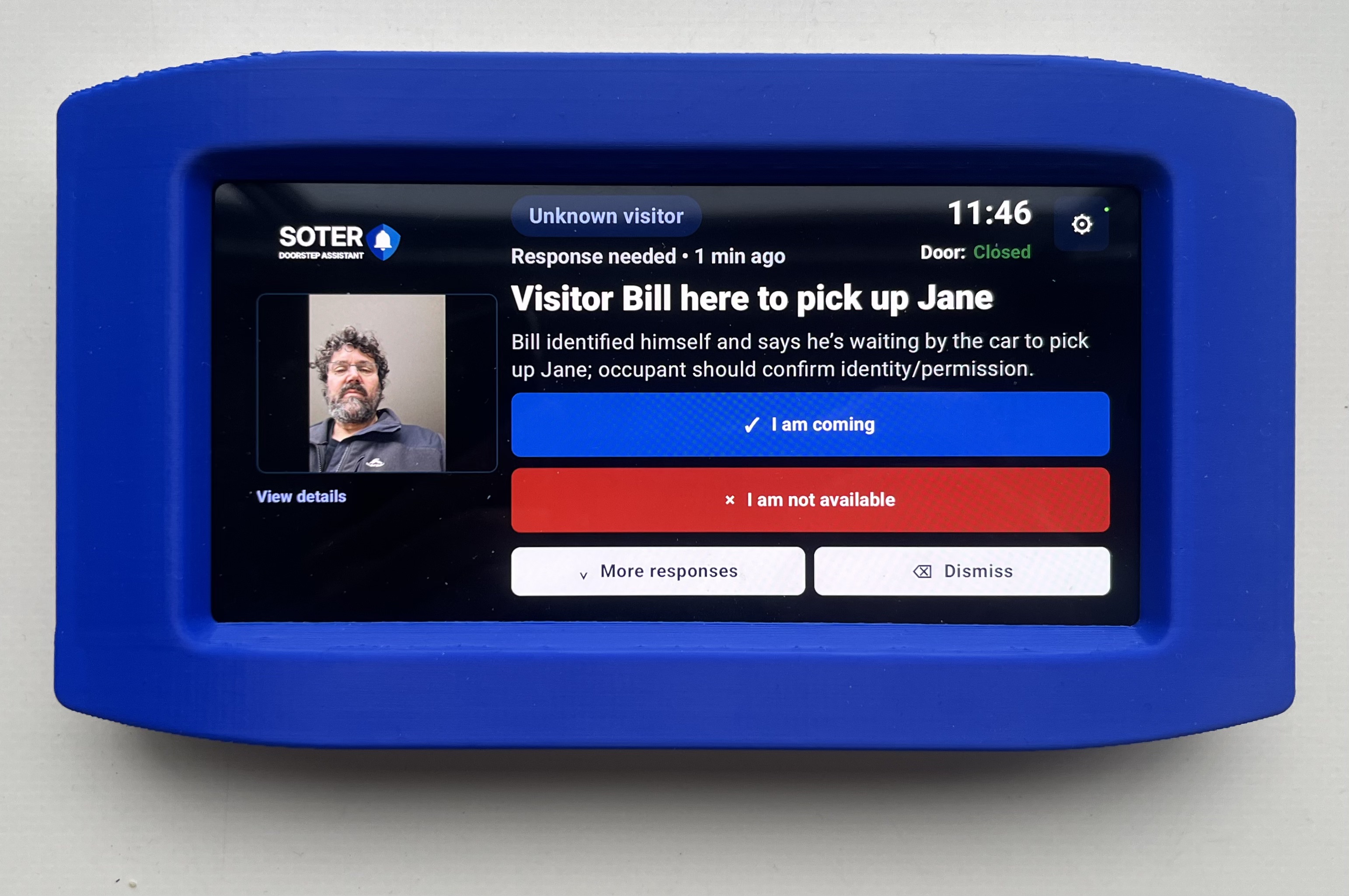
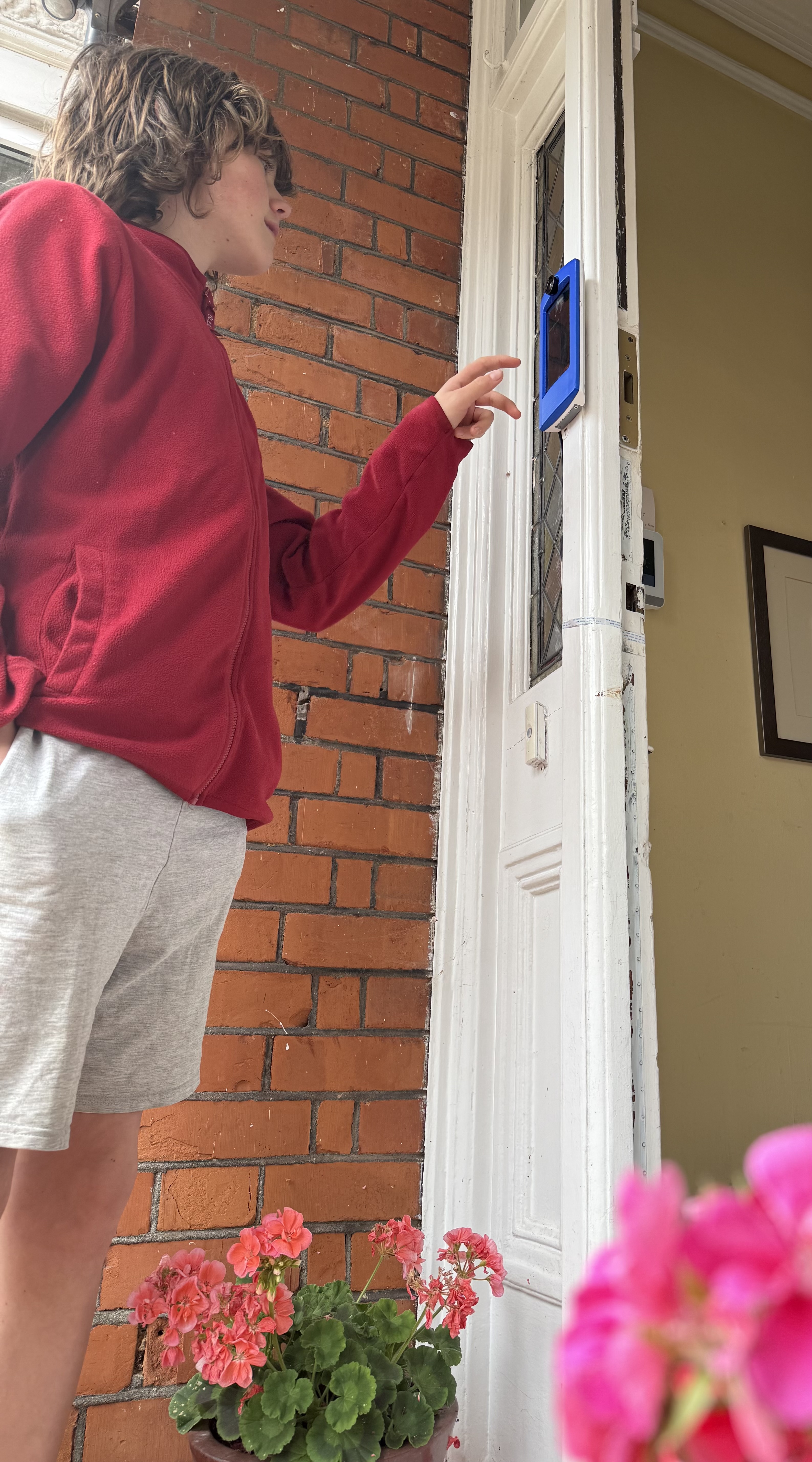
A Soter Indoor unit

4 July 2026

Pilot extended four more weeks

A month in: 7,073 doorstep events, and 8 of 8 households asked to continue using Soter.

Our Dunedin pilot has passed the one-month mark, and it has been extended for a further four weeks.

The numbers: 7,073 doorstep events were recorded across 415 household-days. Doorstep events include door-open and sensor activity; 3,158 of them were conversations with visitors. The median conversation was 47 seconds: long enough to establish who the visitor is and why they've come... and hopefully short enough that couriers don't walk away.

When participants told us Soter helped, the most common reasons were knowing who was at the door and why they came — exactly the job we built it to do. And the signal we're proudest of: 8 of 8 households asked to continue using Soter after the pilot.

These are early, draft findings from a pilot that is still running, and there is plenty still to improve — participants want faster responses and rock-solid reliability, and that's where the next four weeks are focused.

Chart of survey responses showing what Soter helped with, led by knowing who was at the door and why they came

15 June 2026

All eight pilot households are now live

Soter is answering real doors — and the first co-design changes are already shipping.

Seven of our pilot households have now completed their baseline weeks and switched to normal operation. Soter is greeting couriers, screening unknown callers, and keeping families and carers in the loop at eight real front doors across Ōtepoti Dunedin.

The best part so far is how quickly participant feedback is turning into product. Working with a blind participant, the occupant app has been made screen-reader friendly. We are working on indoor touchscreen units so occupants can deal with the door without reaching for a phone.

Weekly check-ins with every household keep the feedback flowing, and short surveys after doorstep interactions are building a picture of what works and what needs improvement. More on that as the data comes in.

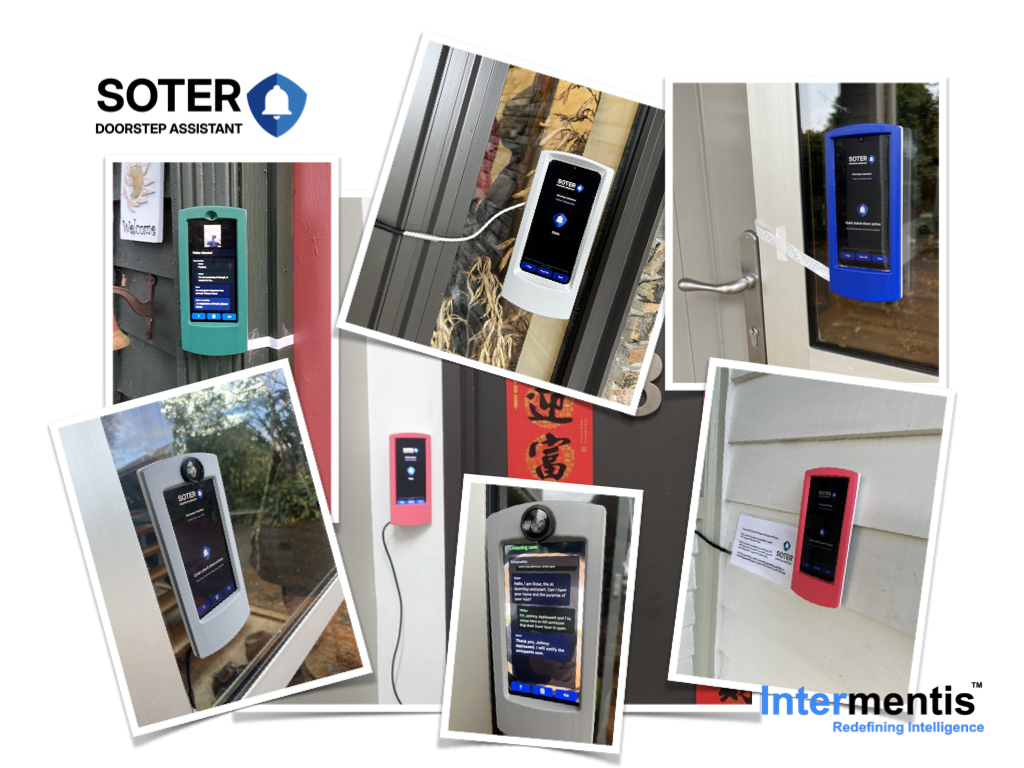
A collage of Dunedin doorsteps taking part in the Soter pilot

25 May 2026

First Soter units installed in Dunedin homes

Our real-home pilot begins — weatherproof units on real front doors across Ōtepoti Dunedin.

Installation has begun for our Whaikaha – Ministry of Disabled People funded real-home accessibility pilot. Over the next fortnight, 8 Dunedin households will have a Soter unit fitted at their front door, along with a door sensor and the occupant app.

Every home is different, and that's the point. Installs are tailored household by household: mounting position, camera angle, and the low-voltage power feed routed through the door jamb on a thin ribbon cable. The households in the pilot represent a genuine range of access needs — mobility, vision, hearing, and communication — because the front door has to work for everyone, not just the average visitor.

Each home starts with a quiet baseline week: Soter records doorstep activity but doesn't interact, so we can measure how the door works today before we change anything. Then the conversations begin.

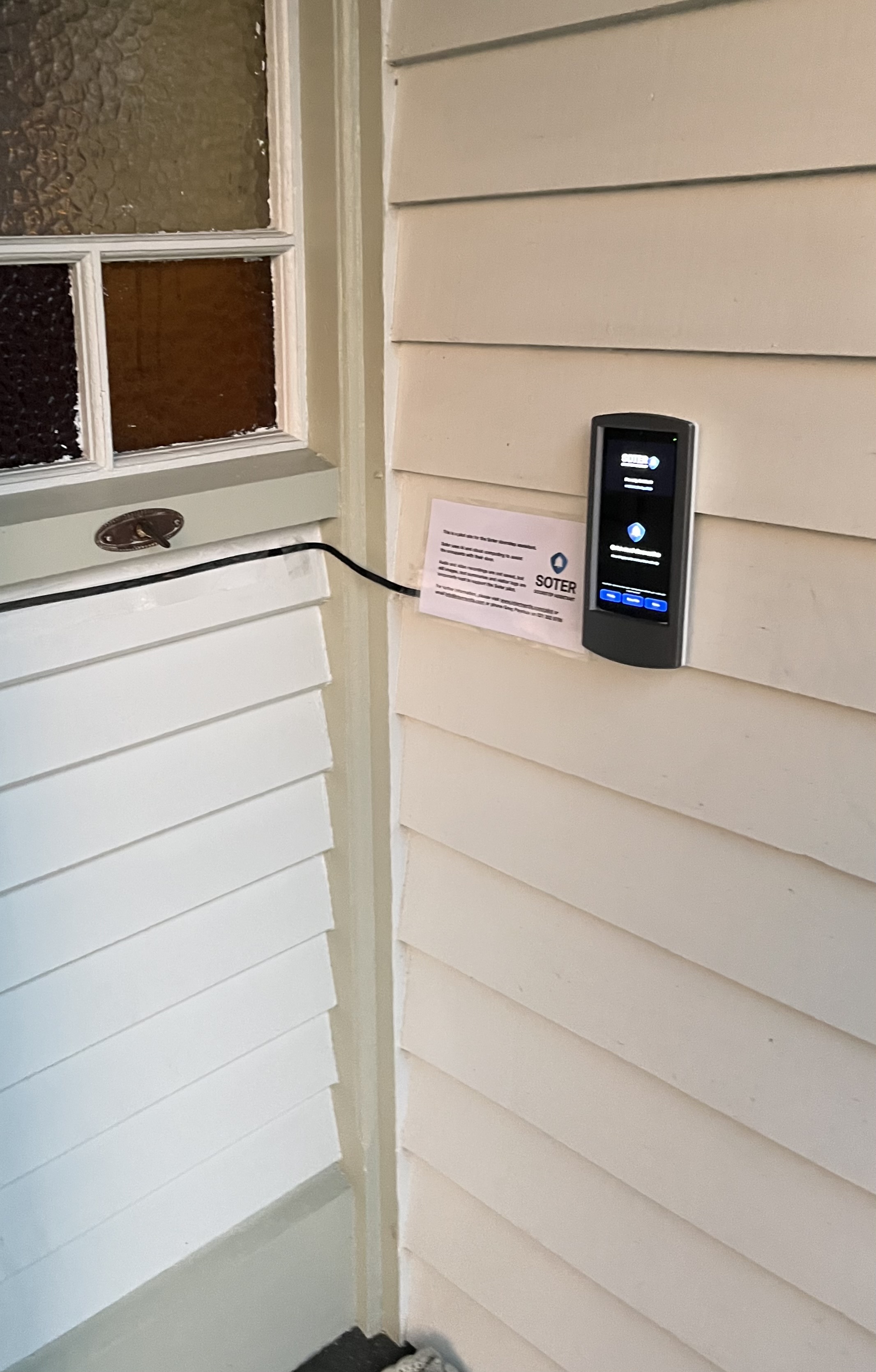
The first Soter doorstep installed on a door