The product
Built for real-world doorsteps
Handles the door. Keeps everyone informed.
Soter works autonomously, so the person at home does not need to do anything unless they want to.
Why Soter
Meet Soter
What's included
Built for real-world doorsteps
Every feature is shaped around safer access, accessibility, and simple everyday use.
Good to know
A few practical questions
When will Soter be available?
Commercial release is targeted for the first half of 2027, with New Zealand, Australia, the UK, the US, and Canada launching at the same time.
Is the deposit refundable?
Yes. The $100NZD deposit is fully refundable any time before you confirm the final terms. If Soter cannot offer supply by 31 July 2027, you can keep your reservation or receive a full refund.
Which countries can reserve?
Anywhere — if we can't supply your country at launch, your deposit is refunded in full.
Does Soter record video?
No. Raw audio and video are never saved. Soter keeps still images, text summaries and visitor logs, under the household's control.
What the person inside experiences
The household members are shielded from door interactions as much as possible, and only notified when required. The exact level of involvement and who gets which notifications are set from the occupant app. This app, which is normally installed on a phone but can also be accessed through a web page, receives notifications. The person inside stays in control: they can respond, or let Soter handle the visit entirely.
There are other ways in which Soter can notify people:
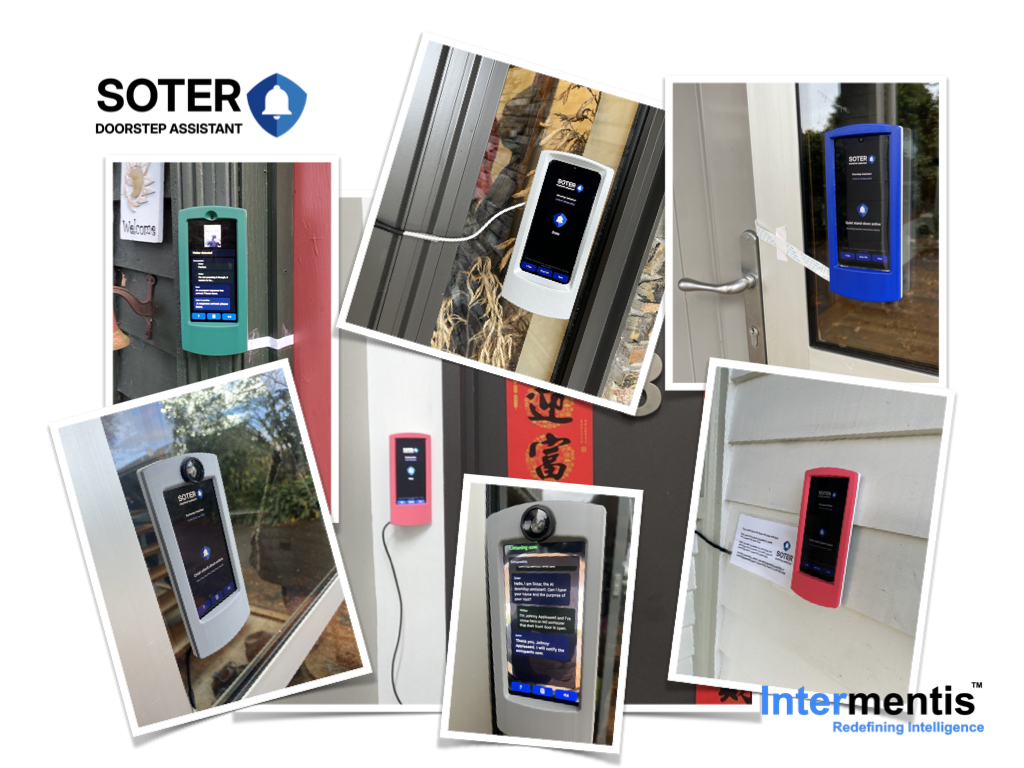
- The indoor unit (pictured) was developed during the Dunedin pilot so occupants can understand who is at the door and respond without relying on a mobile phone. The occupant app was made screen-reader friendly by working with a blind participant, and the indoor unit responds to touch and voice commands.
- Soter can also send notifications to, and receive responses from, Alexa smart speakers.
- Basic notifications also arrive on smartwatches. We are currently working on tighter integrations so images can be viewed and responses made from some smartwatches.
Household rules
Appointments, regular services, and expected deliveries can be set up in advance, so Soter knows who is due and when. A temporary PIN can be used as part of an expected-visitor workflow.
Known-visitor recognition is consent-based and controlled by the household. It helps match a visitor to a household-maintained profile; it is not identity proof.
Multi-person households can keep a profile for each person, with alerts, escalation contacts, and privacy settings tailored per person. Quiet modes let routine visits be handled without unnecessary notifications.

Connectivity and power
Wi-Fi and cellular
Soter can connect over the home's Wi-Fi, over a cellular connection, or both. With both configured, it can fail over automatically — so if the home broadband drops, the doorstep stays covered and alerts keep flowing.
This matters most for the households Soter is built for, where "the internet is down" cannot be allowed to mean "nobody is watching the door".
Battery backup
A built-in battery is being developed to keep Soter running through power interruptions. Combined with cellular fallback, the aim is simple: no gap at the door.
Hardware

Installation
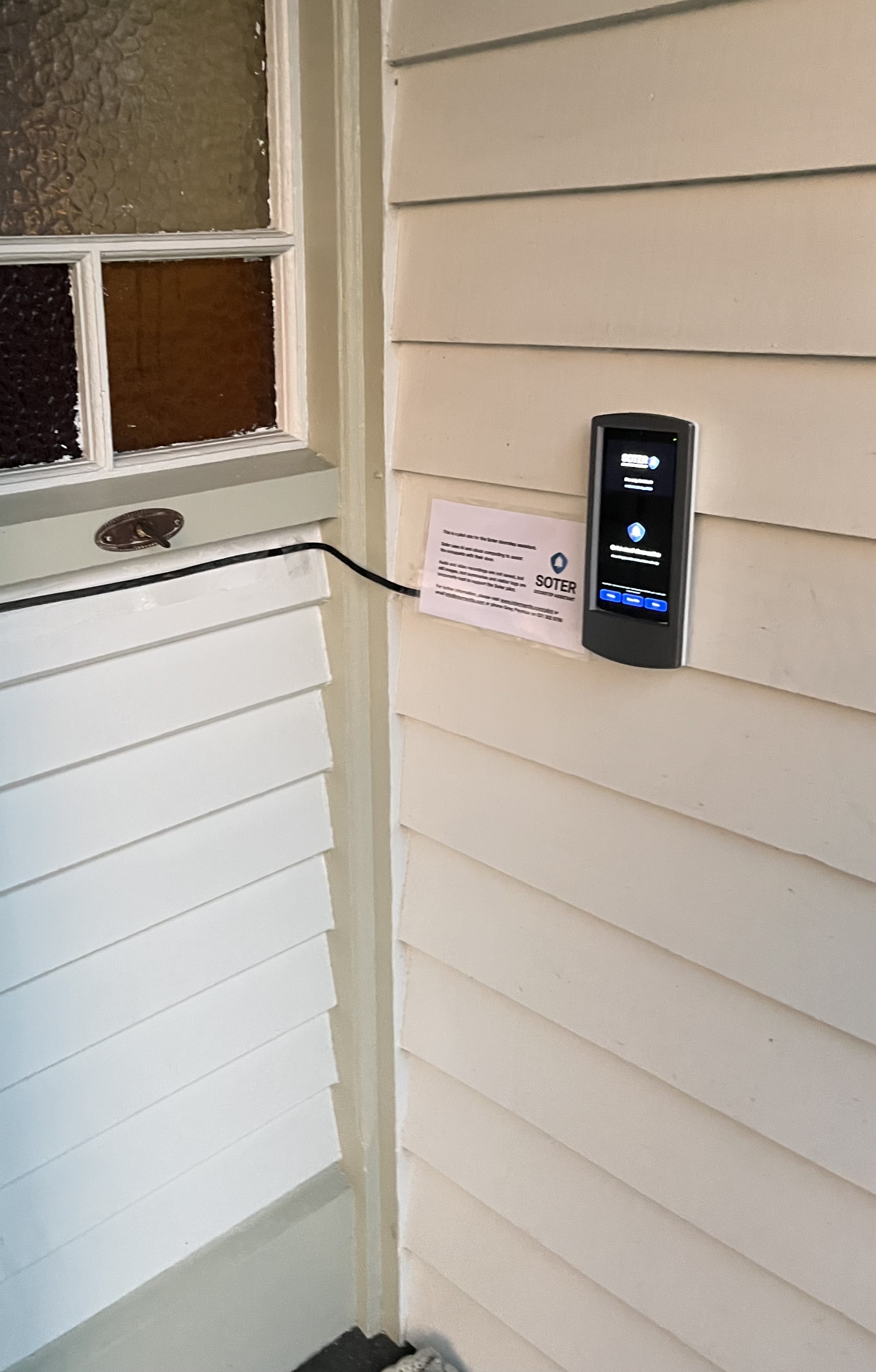
Designed for self-installation — mounting plate, low-voltage power feed through the door jamb, pre-configured door sensor. Pilot installations were performed by our team; the self-install process is being finalised for launch.
A professional-install option is in development for households that prefer it or have unusual doorways.

Detailed specifications
Review the current hardware, software, accessibility, integration, and service specifications for Soter.